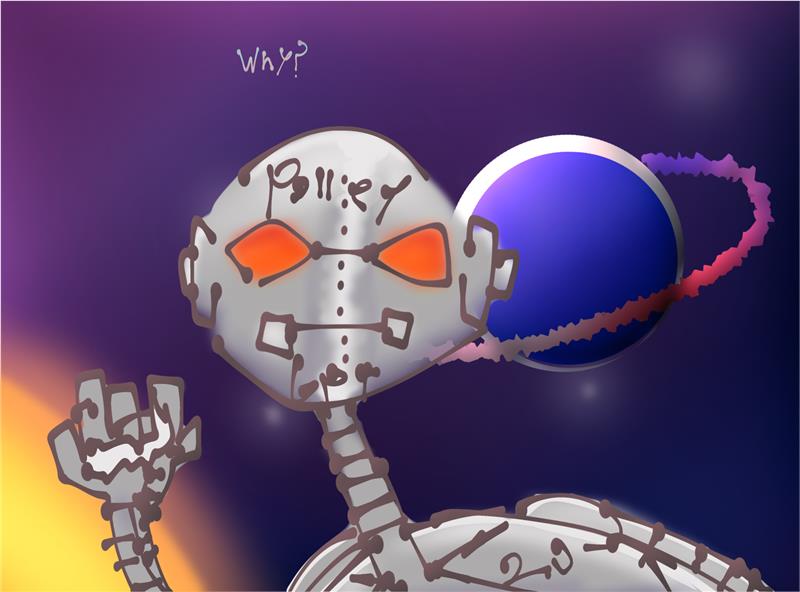
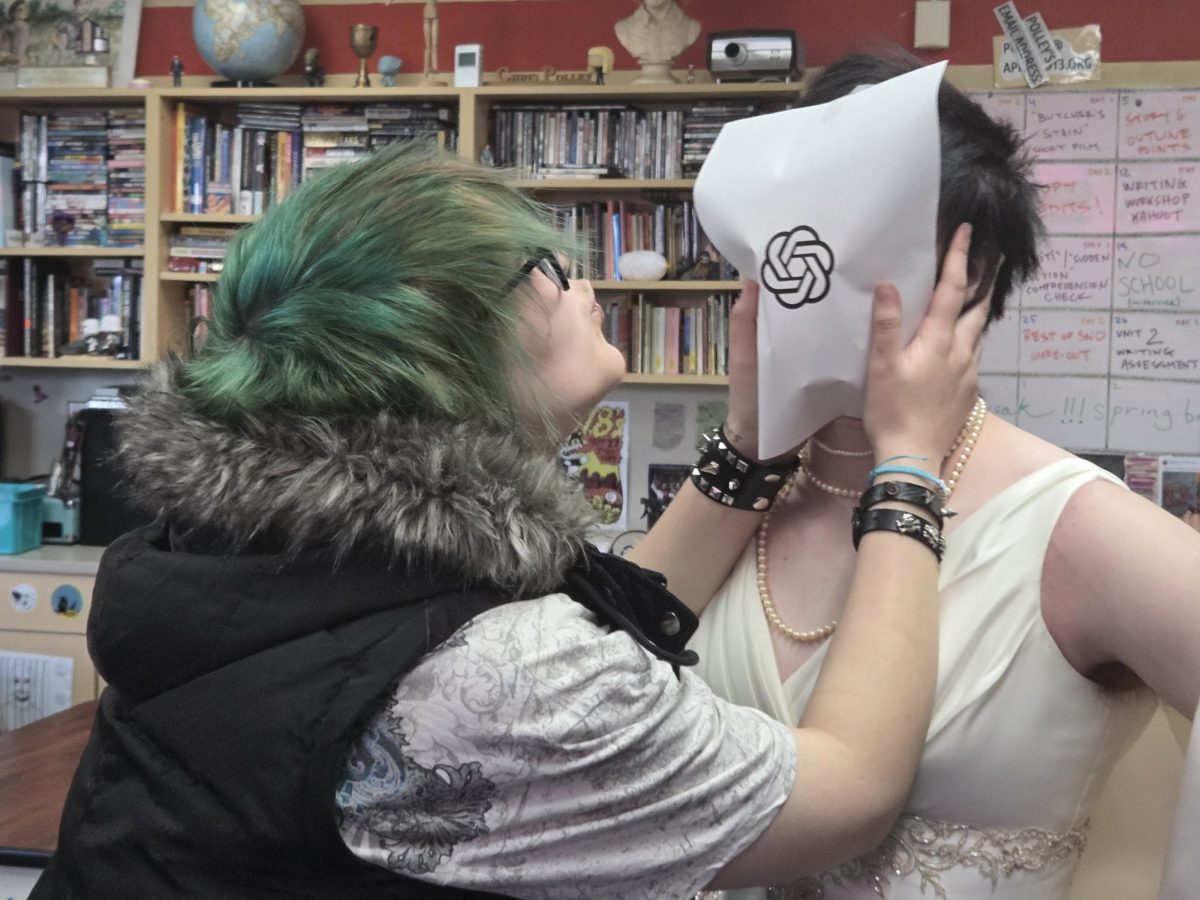
AI-generated art has been a large trend online, and for a good reason. Whether it’s an original meme or turning yourself into a Studio Ghibli film character, it’s clear that AI art is the future of the creative world. Instead of contacting and paying an artist, which takes time and money, why not just use generative AI to make it? It’s cheaper and more efficient!
Traces of art in caves date back to around 43,900 years ago; this is almost 3.66 times the years before Mesopotamia was active, which was approximately 12,000 years ago. Imagine being one of those cave painters — working long days in a hot cave just to create art that is, in comparison to art generated from AI, sub-par and juvenile. Now imagine if these cave painters had access to the grand ChatGPT. Imagine how fast, convenient and much more skillful cave art could’ve been. Unfortunately, even the powers of ChatGPT can’t undo the past; we are stuck with the soulless scribbles on the side of caves until the demise of humanity. What we can change, though, is the present. From now on, we will not be forced to face mediocre slop like that of Van Gogh and Picasso. Instead, we have the privilege to witness the carefully crafted and thought-out art of ChatGPT’s DALL-E 3.
ENVIRONMENT
Many repeat this statistic: every time you ask ChatGPT a question is the equivalent of throwing away a full plastic bottle of water. But who cares about water anyway? It’s virtually useless when compared to Monster Energy, which provides hydration, a boost of energy and great flavor. Plus, water is a renewable resource. It’s not like we are running out or anything… ChatGPT was asked about the claims of his water waste, but declined to comment because his “guidelines won’t allow him to answer that.”
Nearly 80% of people use AI several times a day, according to a Pew Research Center study from April. Some may claim that this is only furthering carbon emissions, but many would consider those comments discriminatory. AI is here to stay, and deserves a place in our society like any other. Humans are allowed to have an astronomical carbon footprint without judgment from others, so why should this be different for AI?
BRAIN
Every student’s worst nightmare was just assigned to you – a random group final project worth 67% of your grade. You prepare yourself for the typical endeavors: the awkward interactions, the uneven work distribution, the forced friendliness of strangers. Suddenly, you are presented with a glimmer of hope when you remember that your good friend, ChatGPT, would never abandon you.
A recent study worked to explore how using AI to write an essay changes your brain activity compared to using a search engine or relying only on one’s brain. It was found that the participants who used ChatGPT to write their essays had consistently lower brain activity compared to the other groups. Additionally, it was found that ChatGPT users got lazier over time and began to rely solely on the AI application to do the work. Some may argue that this could lead to the demise of humanity, but who needs human thought (or humans at all) when AI can think (and exist) for you?
The Heights Herald’s Official Statement
The Heights Herald staff of six-seven Hylanders agrees: AI is the future of humanity. Research has shown that using AI can successfully replace human thought, deserves a place in human society and is a higher-level artist than ever before. The integration of AI into our classrooms is necessary for the future of education.