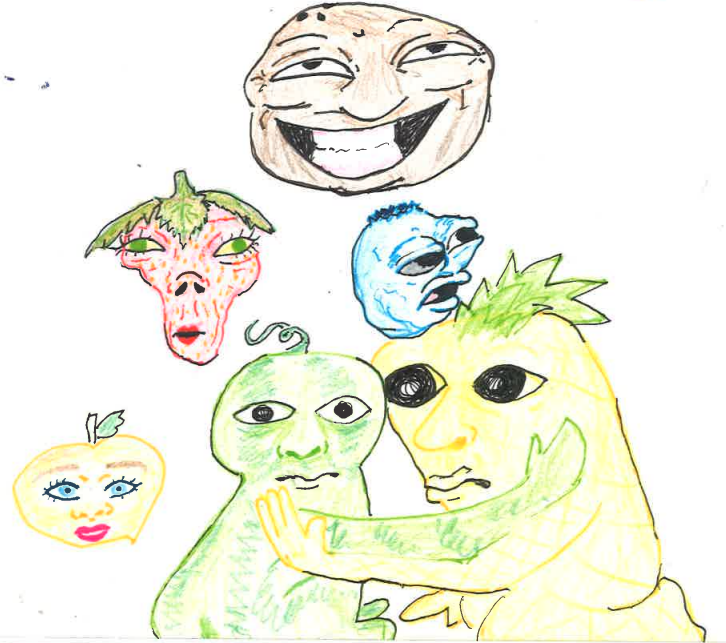
Love is beginning to ripen as the infamous reality TV show “Love Island” is now replaced by an unofficial social media spin-off where the cast is…AI-generated fruits??
“Love Island” is one of the most popular series in recent years, with its last season garnering over 18 billion streams. It has begun to trend again in 2026 as its human counterparts have been replaced with AI-generated humanoid fruits. Created by @ai.cinema021 on TikTok, the bite-sized internet program has gained both proud fans and loud haters in just a few months. Launched in March, “Fruit Love Island” attracted millions of viewers, and the account gained more than 3 million followers in less than a week. Its most viewed video was posted late in March and has 39 million views, but as more episodes continue to be posted, the account is attracting more and more fans, and also, more haters.
As anyone who’s seen any kind of competitive romance-centric reality show can guess, the story follows anthropomorphic AI fruits as they attempt to find love while they become entangled in dramatic situations involving infidelity. Its humorous and dramatic content has attracted millions, including celebrities like singer Joe Jonas and musical artist Zara Larsson. It is, for better or worse, the first AI-generated episodic series that has made major headlines and a steady viewership.
AI-generated content isn’t anything new, to be clear. Ever since the “Will Smith Eating Spaghetti” AI video was posted and circulated, various AI-generated memes have trended across all social media platforms, especially TikTok. Memes such as Tralalero Tralala, Tung Tung Tung Sahur, Bombardiro Crocodilo and many other Italian brainrot characters were created early last year, and have become among the most popular. While not actually originating from Italy, the term “Italian brainrot” surfaced to describe the nonsensical brand of sloppily designed animated characters, and many individuals have since flocked to create content related to these memes based on what kind of audience it could attract, with its target audience being young kids.
Some have even created games, merchandise, toys and plushies. Content creators have also tried generating episodes of their favorite TV show using AI, with an example of this being the start-up Fable Studio creating their own episodes of “South Park” only using AI. Intellectual property rights defenders have a problem with this, often calling it soulless and uncreative, with zero talent and hard work being used to create them, not to mention the infringement on copyrighted material, all of which are similar reasons why “Fruit Love Island” has become such a controversial subject.
Content like this leaves real artists in the dust when it comes to being discovered on TikTok and other platforms, and they also pose a potential threat to the environment since AI uses vast amounts of water just to function.
“Seeing ‘Fruit Love Island’ trend on both TikTok and Instagram Reels is so dystopian, there’s so much water being wasted to create slop like that with no real value or substance,” Ahmed Nuh (12) said.
Great amounts of water are needed to cool the hardware used for fine-tuning generative AI models, and as more generative AI applications are being made, there will be more demand for high-performance computing hardware and water, directly impacting the environment. Multiple data centers are being built across Oregon, where their water usage has added problems to communities, affecting nearly 4000 people, just to name one.
“I despise AI and would prefer to live in a world without it,” Winter Kieffer (12) said. “It’s ruining our planet by using up our water, and it’s stealing our photos, art and books that each of us [has] worked so hard to make. No part of AI is worth taking all of that.”
According to monthly facility monitoring reports, data centers around the Boardman Area can use over a million gallons of water in a month. During the cooling process, the water evaporates and concentrates chemicals and toxins already present to dangerous levels, which the Port of Morrow later disposes of on surrounding farmland.
“Fruit Love Island” is not a one-of-a-kind series, as some have claimed. It’s part of a growing hive that continues to expand as AI continues to become more part of our daily lives. Many other AI videos and memes that are trending on social media have since engraved their mark on countless online sites, as there is no social media platform that you can go to without seeing AI being used. Could generative AI benefit the future of entertainment by creating wider access for those of all abilities and skill levels, or is it more likely that the naysayers are right—that it’s a threat to human artwork, and perhaps even survival, and could quite possibly be the end of the modern world as we have come to know it?