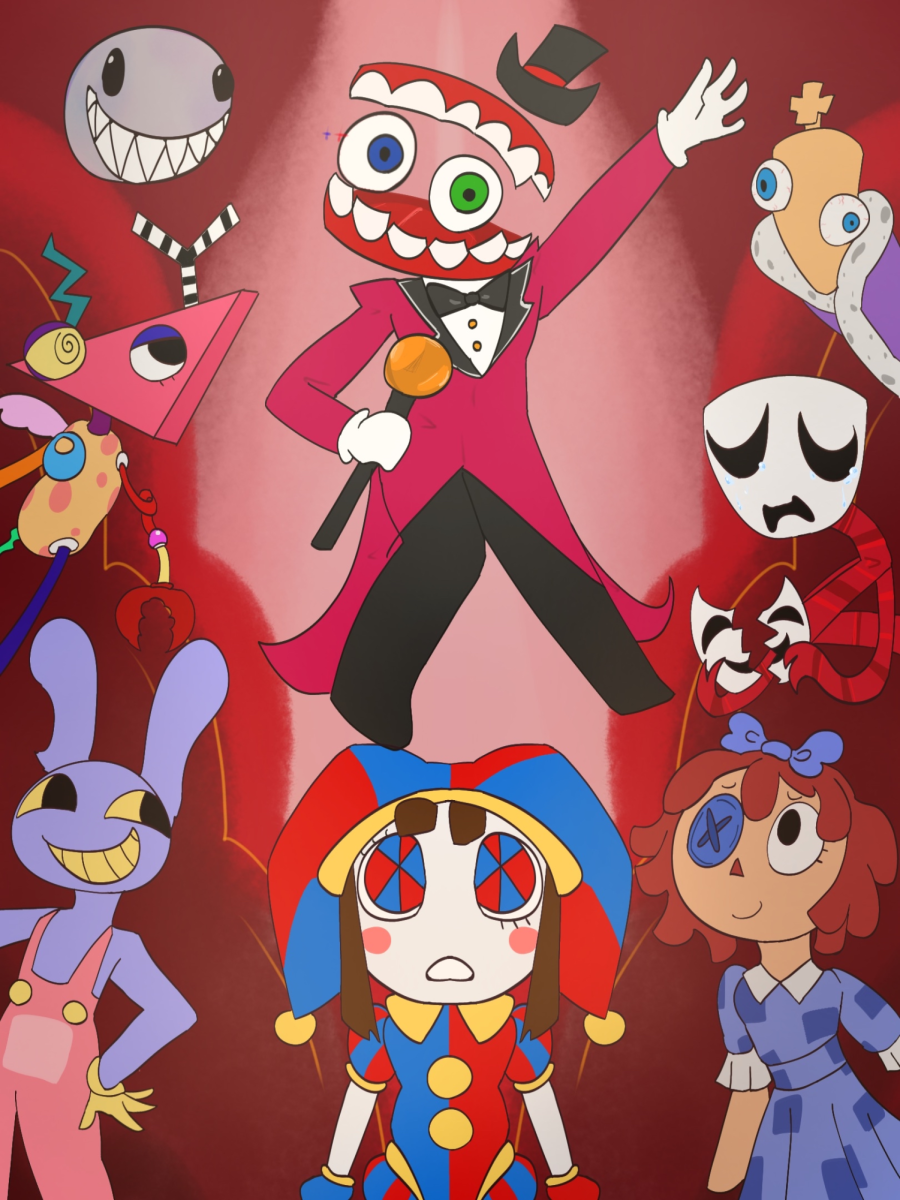
“The Amazing Digital Circus” (“TADC”) is a psychological dark comedy web-series created by Gooseworx from the indie Australian-American studio Glitch Productions. It became widely popular almost immediately after the release of the pilot episode in October 2023. With immense hype from YouTube and fans of the show’s predecessor, “Murder Drones”, production of the episodes became more and more anticipated, with thousands of viewers making edits and fan pages for the series. Over the span of three years, the series is finally making its last act with the final episode releasing on June 4, 2026, including in movie theaters in some cities.
“I started watching [‘TADC’] because of [my friend] Darius Gibbons [but] I saw many spoilers about it on TikTok and stuff,” Milo Vela (9) said. “So many spoilers!”
For those not yet in the know, “TADC” revolves around six humans who put on VR headsets and become trapped in the Digital Circus, a circus-themed simulation where they are met with an AI ringmaster, Caine, and his assistant, Bubble. The pilot follows Pomni, the newest addition to the Circus, as she learns about her new life and slowly realizes she can’t escape and is trapped there along with everyone else. All of these humans are grappling with the fact that they can’t get out, and this newfound pointlessness in their lives reaches new levels of absurdity as Caine tries to get them to go on his silly adventures.
Along with being trapped in the Circus, the humans are given new cartoon bodies upon their arrival meant to match each of their characteristics as a person, but a lot of them don’t like the bodies and feel out of place in them. Pomni is given the body of a jester, Jax is given the body of a purple rabbit in overalls, Ragatha is given the body of a rag doll, Kinger is given the body of a king chess piece, Zooble is given a body with unlimited interchangeable parts and Gangle is given a body of ribbons with a comedy mask as her face, which can break to reveal a tragedy mask. These bodies allow the viewer to get a deeper view of who the characters are, offering a deeper insight into their psyche and subconscious, which might not have been revealed otherwise.
“So many things that [are similar to ‘TADC’] try to look childish but are mature [or] fail to feel mature [but are more] childish. [Sometimes they even] end up in a middle ground between the two,” Juniper O’Nan (9) said. “‘Digital Circus’ manages to keep [that] balance between childish visuals and mature themes and is better because of it.”
Although ‘TADC’ has colorful imagery, eccentric characters and humorous feels, creator and showrunner Gooseworx is still able to incorporate deep conversations about mental health and genuine real-life experiences. There are a lot of mental health themes that can be seen through the characters’ relationships and self-image, including Body Dysmorphic Disorder (BDD) or body dysmorphia, which is when someone is hyper-aware of their appearance and often tries to fix perceived flaws that usually no one else can see. Zooble, for instance, is seen to have body dysmorphia and struggles with it throughout the course of the show. They especially struggle with their body being completely interchangeable, which gives them the chance to get rid of the things they don’t like about their body, thus making their BDD far worse.
Another one of these mental health themes is Depersonalization/Derealization Disorder (DPDR), which is when someone often has out-of-body experiences or feels like their life isn’t real—like they’re living in a dream all the time. Jax experiences this, and it significantly impacts how he views his situation and the other characters. In one of the episodes, he even says, “You know none of this is real, right?” when he’s talking to Pomni about being trapped in the Circus.
Additionally, Bipolar Disorder is depicted in the show, which is when someone experiences intense mood swings between mania (extreme emotional highs) and depression (extreme emotional lows) without any moods in between. In ‘TADC’, Gangle experiences this, which is visualized through their changing comedy and tragedy mask. The examples of these mental illnesses in the show give fans a representation of psychological conditions that a lot of other shows just don’t have, or don’t depict accurately. These representations can also give people who struggle with these things someone to relate to or even hope that things can get better.
While Zooble, Jax and Gangle are the primary ones experiencing specific mental illnesses, all the other characters exhibit signs of mental disorders or trauma as well. One more universal theme of the show is masking. Masking is a coping mechanism where you hide how you feel or change how you act to fit societal expectations. The primary character seen masking is Jax. He is almost always seen smiling despite any kind of stressful circumstance and doesn’t let any of the other people in the Circus know that he’s struggling with anything. A lot of people do this in everyday situations, but if you’re doing it all the time, it can be exhausting and can lead to further problems.
Throughout the show, the cast of characters grapple with a sense of pointlessness in their life since being trapped in the Circus, leading to internal pain and suffering. But while Jax puts up a mask and denies his struggles, the other characters lower theirs and realize that all they have is each other. The biggest theme in “TADC” is human connection. Leaning on each other to get through struggles instead of suffering alone, letting things get worse. Characters talk to each other one-on-one and are vulnerable, helping their problems get easier to manage, which is a great lesson for viewers who may experience similar challenges. A good example of this is with Zooble and Gangle. Gangle is struggling with their changing emotions and Zooble is struggling with their changing body. Both have insecurities, but during one of Caine’s silly adventures, they get a chance to talk and help each other.
So, even if you don’t give it a try (it’s available to stream on Netflix), take the advice of this show: be there for one another.