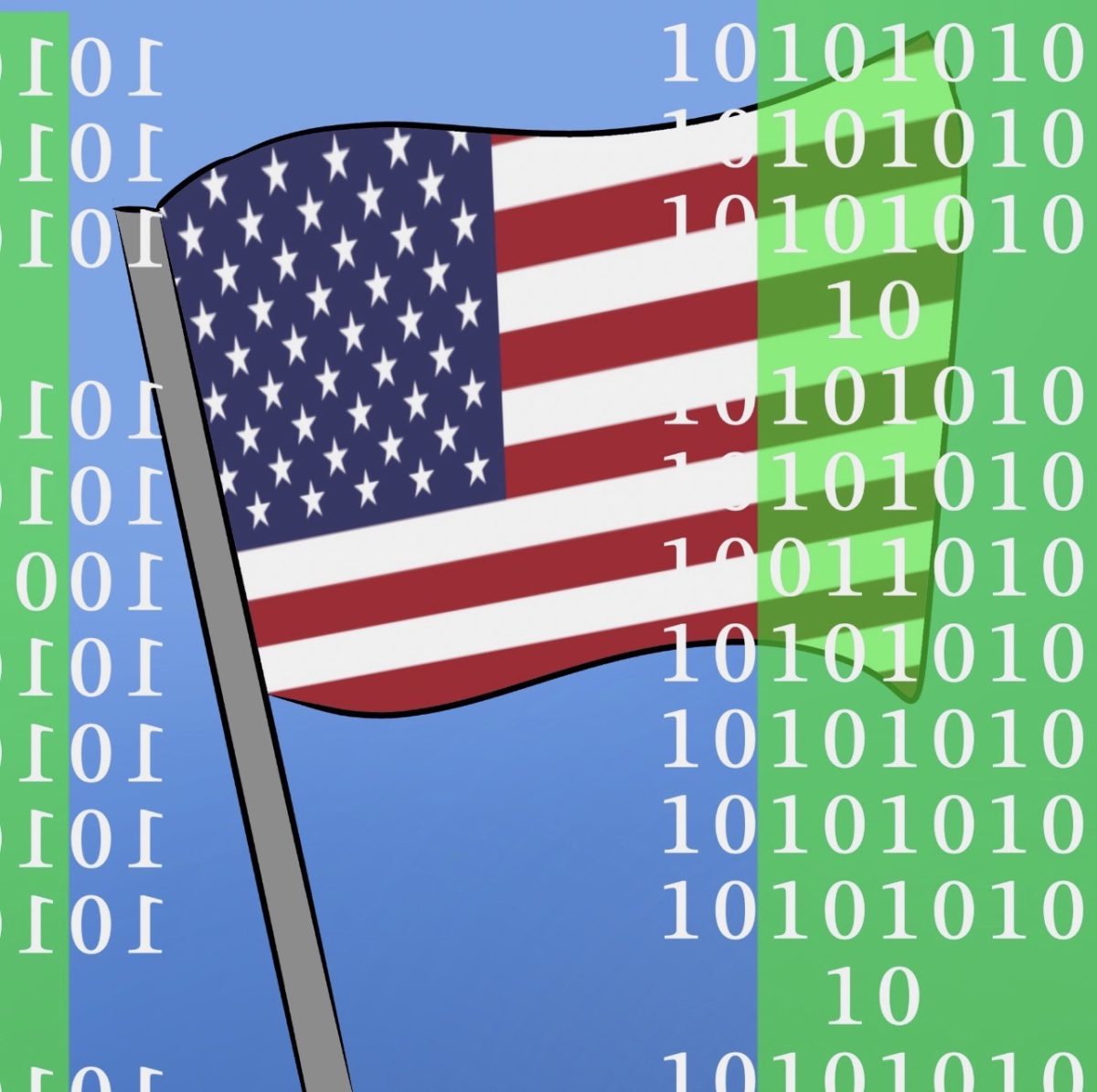
AI has become a growing presence in both everyday life and in a professional setting, but what happens when it’s used by the government? President Trump’s administration is actively removing laws originally set in place to handle the AI explosion and leaving it up to state governments. In addition to the private sector, public agencies are now scrambling to incorporate AI everywhere, even at the cost of their own customers and users—and often without their knowledge.
During Trump’s second term in office, AI has been heavily encouraged. The Department of State released a compliance plan in a document named OMB Memorandum M-25-21, detailing its plan to generalize and accelerate the use of AI in both a public and government setting. The three major plots to implement this use in recent years has been to encourage innovation and drive funding into AI at the state, federal and local levels, thus garnering public trust and support for their more far-reaching federal use of AI.
These ideas were set in motion on January 23, when President Trump passed a bill that lifted safety guidelines and barriers for AI, claiming it was a way to prevent AI to develop “ideological bias or engineered social agendas,” directly revoking former President Joe Biden’s 2023 executive order that placed guidelines on generative AI use in government, requiring agencies to share their safety tests with their government before public release. While the sudden freedom for AI usage could be seen as liberating and promising, it could also be used as a way to spread misinformation, especially in critical settings such as hospitals or finance, where even the slightest mistake can cause major consequences.
With the rapid craze of generative AI in 2024, many publicly funded organizations have found ways to adopt and use it to a certain extent, but most have placed limits on what it can and cannot be used for. On March 28 of last year, the Office of Management and Budget submitted another memorandum aimed directly at the heads of federal agencies, outlining their goal of improving their own use of AI while managing any possible risks in the field, emphasizing the rights and safety of the public.
Last month, however, Trump bypassed individual states’ authority to legislate AI use in government, suggesting that all that was needed was federally approved rules and regulations to prevent anything false or biased that might be generated by the technology. Federal agencies such as the Department of Justice and the Federal Trade Commission, however, cited AI as a way to cut costs and be more efficient, despite the protestations of several in the private sector and state officials across the country.
“States’ rights are important, but for something as universal as AI, you need a more centralized set of rules to make sure AI is safe for everyone, Columbia Heights High School (CHHS) Physics teacher Mr. Evan Kohl said. “Having guidance from the federal government is really important.”
Meanwhile, other states like New York have introduced the GUARD (Guidelines for User Age-Verification and Responsible Dialogue) act to their legislatures, which brings transparency towards the state’s own use of AI, but it also has its opponents, as it asks for verification of age, which could limit freedom of expression and tear down safety walls that minors had, making them an easier target to find and possibly ruin. Minnesota passed a similar law based on privacy and AI on July 31, 2025, under the Minnesota Consumer Data Privacy Act. If AI is given the power to make a decision that could have legal effects (whether in the public or private sector), the consumer has the right to be informed, and if they disagree, be able to change said decision.
Legislatures in other states have also put guardrails in place for any threats that could emerge from using AI in their everyday work, such as mandating human supervision and privacy protection on AI, as well as taking use cases from agencies to watch and train generative AI. Aiming for fairness and bringing flexibility based on other state laws, Connecticut, Delaware, Maryland and more have initiated the process of requiring state agencies to publicly log AI applications in their work that may affect their services.
“I think [while] it’s used for [helpful] reasons like format[ing] things and brainstorming, [it] should not [be] for every task,” Walli Dibba (10) said.
The U.S. government is finding more and more ways to use AI anyway they can without a loud public outcry. They seem to be in a race to determine which country has the most influential AI system. But how ethical can they be if they are seemingly rushing and constantly trying to improve it? Minnesota’s own government has pressed on creating more guardrails with AI in the face of its original rules disappearing. This, however, only highlights just how biased in favor of AI the federal government has become, creating another division between those beholden to ethics and those beholden to corporate technocrats.