
With the fast-paced nature of everyday life, many people want to live in a calm city. The Columbia Heights city website claims they “have a small-town feel while still striving towards the goals of a big city.’’ But is this true? Or has the recent and rapid urbanization of our small town hurt the communities that have long called Heights home? A 2017 government report found that more than 70% of Minnesota residents live in an urban area, but what happens when a municipality of under 25,000 like Columbia Heights urbanizes its city beyond recognition?
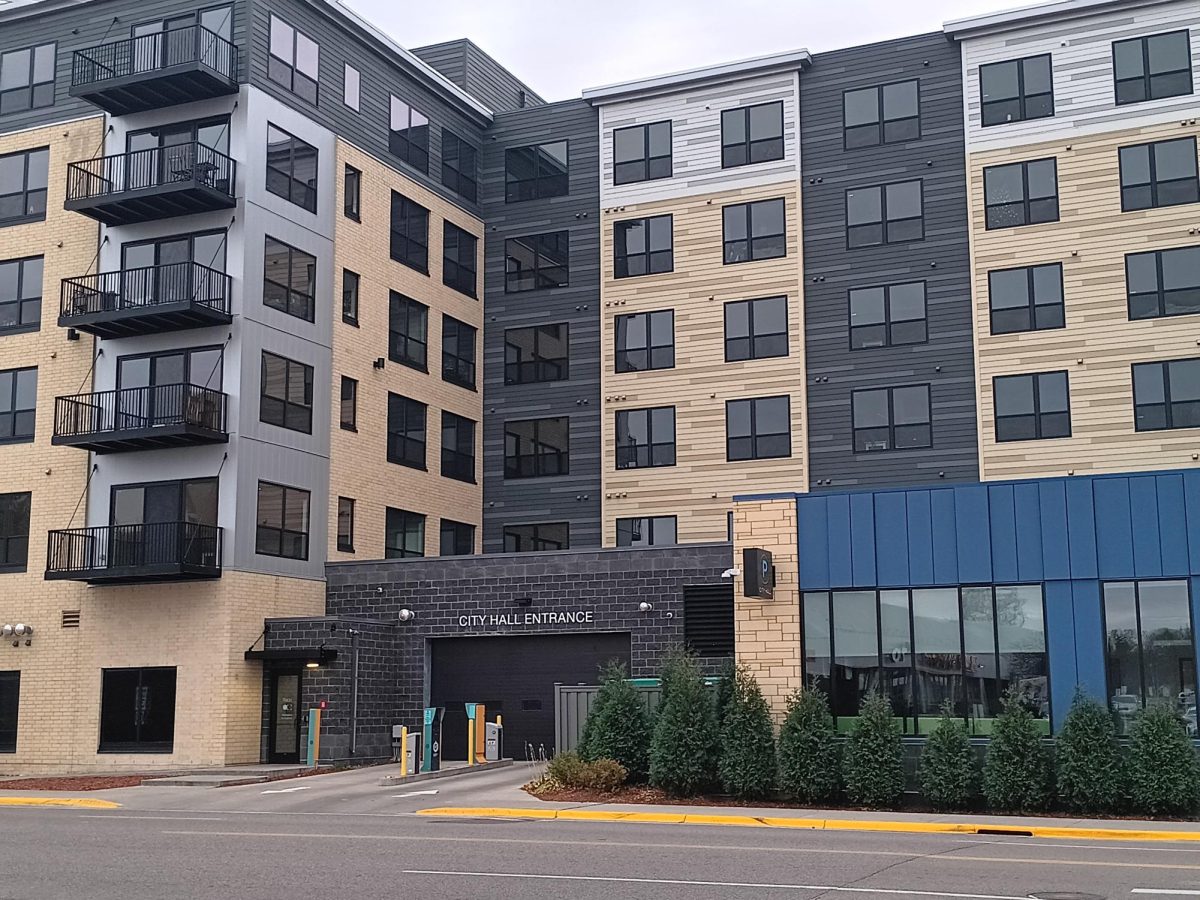
Ever since Heights built its new city hall location on Central Avenue on the bottom floor of the new Ratio apartment building in 2023, it seems like our beloved elder community has changed into a younger community. With a 5.6% increase in city taxes compared to 2024, according to Columbia Heights City Council’s preliminary 2025 Budget, if your house is worth about $270,000, it’ll only be $96 extra, but for someone who is retired, this can be a lot of money, especially if they’re living alone.
“[I’m] kind of conflicted. I like that we have more apartments above the city hall, but at the same time they’re so expensive with not very many amenities,” said by Silas Wahl (11). ‘’ I’m not 100% sure about what the noise is, I think it’s the air conditioning, but if you go behind the City hall apartments, it’s super loud and disrupting!”
This results in our beloved elder community dissipating and selling their houses to a younger community. Although this isn’t always bad, because it does help Heights thrive and have a more active and participating community.
“I think young people are engaged in different ways than previous generations. Many students volunteer for events like street cleanups or Truck-or-Treat, and they bring incredible energy and creativity to community projects,” Columbia Heights Mayor Amáda Márquez Simula said. “ I’d love to see even more youth involved—we have open seats on several Boards and Commissions, and anyone ages 14–19 who lives or studies in Columbia Heights is encouraged to apply.”
The hard part with urbanization is that a lot of new buildings don’t match the vibe of older buildings, which makes buildings like Ratio an eye-sore and more hurtful than they can be helpful. Another downside is how disruptive it is to everyday life for residents who have been there for years. Sometimes new developments are noisy or completely block views from residents. So perhaps Mayor Márquez Simula is right—to move forward, the voices of young people in Heights are more important than ever.
“I do like that the new city hall provides new homes for people in a decent part of Heights close to the library and a plethora of places to eat and work!” Silas Wahl (11) said. “This is very important because [the Minneapolis metro area] homeless population has been quite high in recent years, and any housing is better than no housing. I just wish it wasn’t so pricy, and I wish they wouldn’t have taken so long to build it.’’
In a study done by Minnesota’s Interagency Council on Homelessness, “[on] a single night in January 2024, more than 9,000 persons were homeless in Minnesota. This is a big 9.6% increase from the year before.’’ Many people need housing, so this new building full of apartments is arguably helpful, especially since it’s surrounded by many amenities like food, parks and the library. Medtronic is also planning the construction of “two multifamily apartment buildings, both containing 132 units, a mixed-use building with a range of 150-175 market-rate units and 12,000 sq. ft. of commercial space, 58 townhomes, and associated park and infrastructure improvements,’’ according to the Columbia Heights development page.
Urbanization isn’t always bad. Sometimes cities need new buildings and new people to keep the community thriving! This also helps our community grow and be so much more diverse. A study on Heights diversity by World Population Review says our city has a breakdown of “53.38% White, 24.85% Black or African American, 10.56% other race and 4.81% Asian.” Despite the national rhetoric on immigration, this cultural diversity improves and helps our community be more inclusive, especially in our schools.
“I’ve been to a lot of different high schools, ones that are hardly diverse at all [compared] to ones like Heights that are very diverse. Being at Heights and seeing so many people of different backgrounds and cultures makes for an overall better experience,” CHHS alumna Cassidy Wise (class of 2025) said. “I got to learn about things from friends I wasn’t sure I’d ever learn about, like cultural traditions and clothing. Talking in classes, there was so much to talk about with each other because we each come from such different backgrounds.”
Our city’s growing and eclectic community is also leading to rapid urbanization and the construction of many other new buildings. Not only do we now have a new city hall, but a new Chase bank is located right next to La Casita on Central Avenue. A good part about this new modern development on Central is that it includes a plethora of improvements around the bank, like sidewalks, Native plants and newer trees. They have been built to achieve a LEED Silver sustainability certification, so they can allow potential solar panel use. The LEED Silver Certification is a rating of points, and cities earn points by implementing sustainable ideas and designs.
“Yes, they have incorporated many sustainable features that spotlight the future of construction; solar panels to reduce energy consumption, passive heating design and the heated sidewalk (to reduce sodium chloride poisoning of our lakes),” CHHS science teacher Ms. Aimee Candella said.
The Columbia Heights sustainability page states that in 2024, Heights was approved for partnering with Xcel Energy’s partners in their Energy program. But with new steps toward a more environmentally conscious city comes the elimination of local history.
One of the most egregious overhauls recently has been tearing down the park at Sullivan Lake to build a new fitness court, which may be more appealing to adults but leaves it hard for people to find places to bring their kids or siblings for a space to play. Not only this, but the 12 acres of Sullivan Park that Medtronic owns might be cut into to build new housing and stores between the new Fitness Court and Target, taking away more land for Sullivan’s plethora of plants and animals, but also still leaving some space for the animals. A study done by the DNR in 2019 states, “Over the past 150 years, Minnesota has lost about 50 percent of its wetlands, 40 percent of its forests, and more than 98 percent of its prairies to agriculture and development,” and this new infrastructure could take away homes from the wild plants and animals there.
“Heights is already pretty built up. It is better than choosing an area that does not have any buildings. If buildings are planned well, they build up and not out. This is better for wildlife than our spread-out suburban existence,’’ Candella said. “Anytime there is construction, it will displace native species. Intentionally providing greenways for native species helps with the disruption.’’
While a new playground at Sullivan Park will be constructed in summer 2026, where are children supposed to play until then? This is not only a problem in Heights but a problem in many cities. Having parks and even just spaces for children to hang out without having to worry is an important part of growing up.
The National Library of Medicine claims, “Nature has a calming effect, reducing stress and anxiety.” Parks aren’t a want, but rather a need in child development, and especially with Heights having such a young community now, this is more relevant than ever. Many people would like to settle down and have kids, but are they just expected to keep their children inside all day this spring because they have fewer safe public spaces near them?
“Safety is always a priority,” Márquez Simula said. “If you or your readers notice any safety concerns in our parks, please report them right away. We’re continually reviewing park improvements and exploring new ways to make all public spaces more welcoming and secure.”
Many businesses have even banned people who look younger or have backpacks from being allowed into their stores because of the recent high theft rates. The recently closed Walgreens on 49th and Central would deny any entrance for any young person who was unaccompanied by an adult and/or had a big backpack to be let in, with no exceptions for any time or day. Places like Taco Bell on Central Avenue now have a limit on how many people can go inside in the mornings at once. Next door, Speedway makes you take your bags off when you enter to keep people from stealing. This just shows how unsafe Heights can be or feel sometimes, especially for young people.
“We will prosecute people who commit theft, but the theft needs to be reported to us, and the business must pursue charges,” Columbia Heights Police Department (CHPD) Chief Matt Markham said. “A lot of store theft starts with the company and what they are willing to do to mitigate theft in their stores. We will work with any business to share best practices and help them with theft issues.”
Central Avenue, in general, has become less accessible too. The metro bus line, the 10, which runs from Northtown Mall to downtown, has become more overcrowded and less available to those who need it, especially students whose parents aren’t able to drive them around are constantly using it to get around. An even bigger issue with the streets of central is the crime. Many websites like AreaVibes and CrimeGrade give Central a rating of F for crime. Granted, these rates are for both Heights and Minneapolis Central, but if the 10 runs throughout Central, and middle schoolers are taking this line (including those who live in Minneapolis but go to Columbia Academy), it can be or feel very unsafe.”
Regardless, Heights can be a good place to reside with many opportunities our city offers for residents. Neighborhood ranking website Niche gives Columbia Heights a B+ in terms of places to live, with an A in diversity and an A- in nightlife. Another site, Homes, says that Height is a 79/100 on a scale of walkability. Making our city self-sustainable and accessible for the residents is ultimately a net positive in spite of the rising crime rates (or appearance of rising crime) and the drastic changes to architecture and the parks.
As Heights continues to grow and flourish, only one factor remains certain: How we engage with our community’s leaders about these changes. A good place to start? City council meetings are open to the public at City Hall and streaming online the second and fourth Mondays of every month.