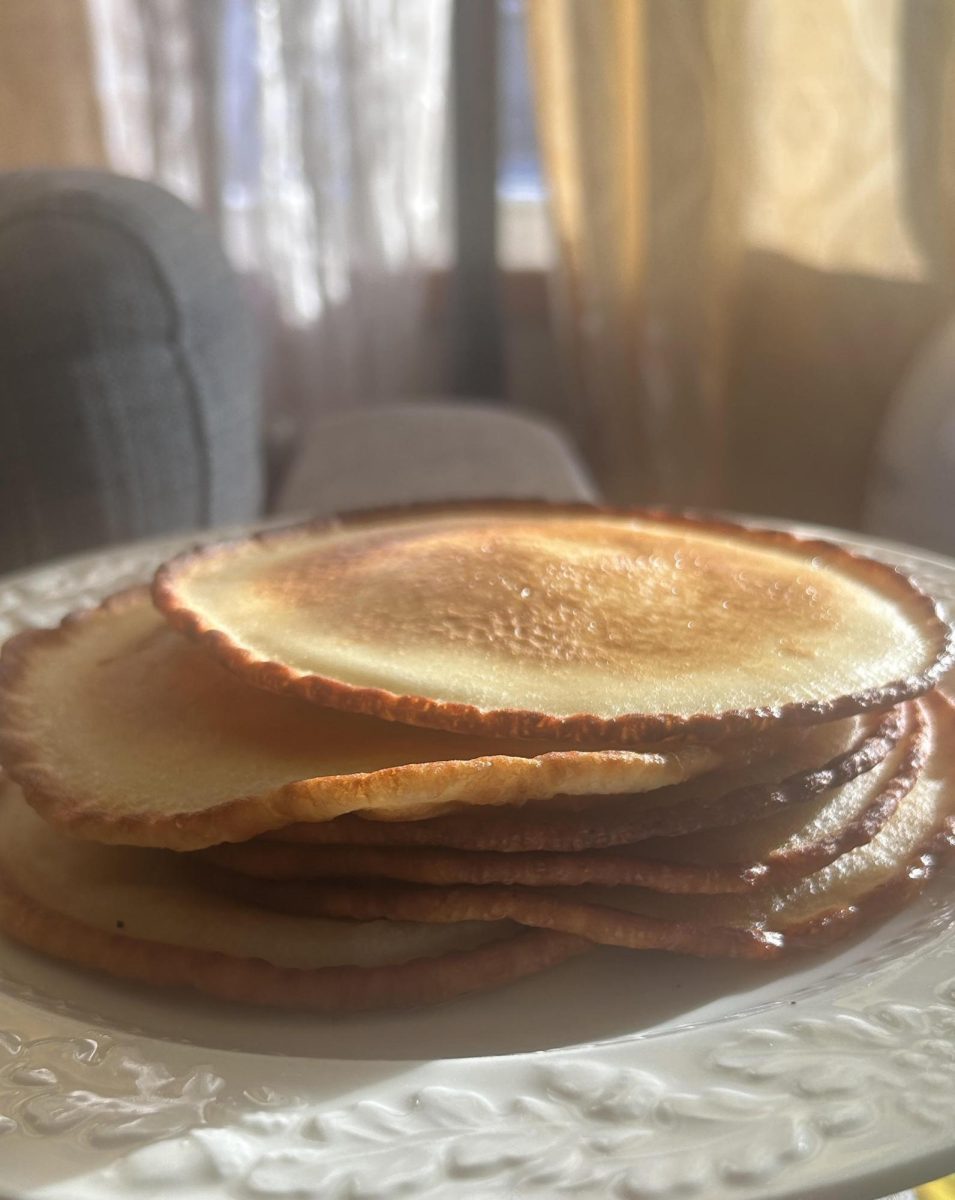

Emborrajados are simple but delectable treats that Ecuadorians have enjoyed for generations. Originating from South America, or — more specifically — the Andean region that crosses between Ecuador and Colombia, the emborrajado is a small, sweet (but also savory) snack where the main ingredient is overripe plantains, or, in a pinch, bananas. Some people often stuff them with cheese or even guava paste, depending on whether the goal is salty or sugary, and then cover them in a batter before frying. On certain special occasions, families might also make emborrajados to celebrate Christmas Eve or other family gatherings or holidays. Now, let’s get into how to make these delicious, nostalgic morsels.
“My aunt Lola used to make them with bananas [instead of plantains], and she taught me how [to make them],” Columbia Heights resident Rachel Celleri Merchan said. “She [also] used to sell them to the children during recess, and your dad used to sell them.”
Ingredients:
- 1 eggs
- 1/2 lb of wheat flour
- 1 cup of milk or water
- A couple of plantains
- A small amount of oil
Instructions:
- Crack the egg into a medium bowl.
- Fill the bowl with flour and milk.
- Mix until thick and pourable — not runny.
- Next, peel the plantain (or banana) and cut it in half. Cut each half horizontally, but don’t make it too thin.
- Pour oil into your frying pan on medium heat.
- Then dip the cut-up plantain/banana into the batter, making sure the plantain is fully covered with the batter.
- After the pan is heated up, turn the heat down to low.
- Gently place the plantain/banana covered with batter into the frying pan.
- Wait a few minutes until the bottom is browned.
- Then, flip the plantain/banana onto the other side.
- When the fruit turns brown-ish all over, move onto a plate.
- Repeat the process to make more, then serve.
Some dishes that are similar to emborrajados are bolitas de plátano maduro y queso, which in English translates to “plantains and cheese balls.” The more popular empanadas are also similar in that they are just dough stuffed with cheese and then fried. However, the process of empanadas is completely different from emborrajados because the dough for empanadas has to sit for at least an hour to make the pastry less sticky.
“[Although I haven’t tried it], I would like to try emborrajados [someday because they] look crunchy and sweet.” Marjorie Quizhpi Huartacho (9) said.
Overall, emborrajados are showing how Indigenous and Spanish traditions can come together in one snack. If you end up making emborrajados, just keep in mind that while some people prefer to eat them as a snack before dinner but they can be served at any time of the day. So, what are you waiting for? Try a bit of Ecuadorian and Colombian culture and share it with others!